




Doctor Who? Atomic Bomber Beeching and his War on the Railways a 2013 polemic by Richard Cotterell
When the 50th anniversary of Britain’s ‘Beeching Report’ passed recently, magazines TV and radio all marked the occasion with retrospectives on the man who took a hatchet to half the 4,000-odd stations, all the 5000 goods yards and 6,000 miles of Britain’s railways. You can buy Richard's book, 'Doctor Who?', here: https://www.biblio.com/book/1733674974 https://www.ebay.co.uk/itm/257334329146 Back in 1963, Dr. Richard Beeching ripped the heart out of the world’s first and greatest railway network, but not one of those articles or programs mentioned that Beeching had no qualifications whatever for what was an accountant's job. His expertise was metallurgy and he'd just helped develop Britain's first atomic bomb. Britain was the first country to industrialise and used her manufacturing muscle to become the great empire in the 19th century. It wasn’t just technology, like the invention of the steam engine, but a national policy of mass urbanisation, transferring labour from agriculture to armaments and industry that put Britain ahead of the world. Mass evictions of the peasantry, known as enclosures, kept the wheels turning in the factories, William Blake’s ‘Dark Satanic Mills’ were filled with hundreds of thousands of homeless men with hungry families to house and feed, desperate for money for rent and food. The wider empire was built on one particular invention, the railway. Moving coal, iron ore, wool and other raw materials as well as manufactured goods off the canals and uphill, down dale, cheaply and at speed gave Britain the edge as a massive shipbuilding program projected Queen Victoria’s power across the globe. Even as Britain’s influence waned between the wars and the deliberate retreat from empire post WWII to make way for the US empire, the railways underpinned everything, moving people, goods and services, wherever they were needed and with a minimum of cost or fuss. Across the Atlantic in the 1920s, though, people were about to be forced off the rails. Rockefellers’ Standard Oil Company teamed up with the Firestone Tire and Rubber Company, Mack Truck and General Motors automobile lobby to set up a bogus public transport firm National City Lines (NCL). Streetcar (tram) companies all over the US were taken over by NCL, which deliberately failed to maintain or replace worn out vehicles. As streetcar lines collapsed, commuters were persuaded to buy automobiles that were rolling off the new production lines. Though the Standard Oil monopoly before it had been broken up by US antitrust laws, the Rockefeller shareholding family was finding new ways to extend its influence. Part of the NCL plan was to make future governments dependent on them for fuel tax revenue. It was Nazi Germany that brought autobahns to the world, followed by US freeways and eventually European auto-routes and motorways in the 1960s. The agenda was threefold: shift travel away from unionized public transport, increase oil consumption – and therefore fuel and vehicle tax revenue - and finally to shift power, forever, into the hands of giant private oil companies like Exxon, Shell and BP. This was a brave new fossil fuel led world where a dependency on energy would drive economic growth like never before. Governments and people alike would have to get used to the car. Public transport was way too fuel-efficient. A two-week rail strike just before the 1955 general election in Britain, which some now believe was deliberately provoked for political gain, brought the country to a halt. A 'state of emergency' was declared two weeks into June and the political classes were reminded just how reliant the nation was on the whim of transport unions. Although the oil companies hadn't made it public, North Sea Oil had also been discovered, so in order to attract US investment into the ambitious offshore drilling program there was pressure from the oil lobby behind the scenes to open up a vast new market for petrol in the UK before releasing the cash to build the rigs. The new oil stream must not be allowed to depress the world oil price and demand for the petrodollar. With consecutive governments, particularly Tory Transport Secretary Ernest Marples - who owned road-building firm Marples Ridgeway - the industrial lobby got its way. Passenger travel on the railways would in future subsidize bulk freight transport. A top secret de-industrialization plan was in place too. In late 1967, British Rail printed a secret 'Blue Book of Maps' with details of coalmines, steelworks etc. and associated rail lines secretly earmarked for closure over succeeding decades. Britain's devastating 1984/5 mine closure program and subsequent strike had been secretly anticipated by government and oil industry alike, decades before. https://www.rt.com/op-edge/205547-beeching-railway-network-britain/ SEE ALSO Reshaping British Railways (1963) - Atomic Bomber Dr Richard Beeching a Metallurgist not Accountant https://www.youtube.com/watch?v=wrTksBQyd9Y
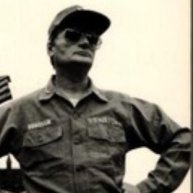
When the 50th anniversary of Britain’s ‘Beeching Report’ passed recently, magazines TV and radio all marked the occasion with retrospectives on the man who took a hatchet to half the 4,000-odd stations, all the 5000 goods yards and 6,000 miles of Britain’s railways. You can buy Richard's book, 'Doctor Who?', here: https://www.biblio.com/book/1733674974 https://www.ebay.co.uk/itm/257334329146 Back in 1963, Dr. Richard Beeching ripped the heart out of the world’s first and greatest railway network, but not one of those articles or programs mentioned that Beeching had no qualifications whatever for what was an accountant's job. His expertise was metallurgy and he'd just helped develop Britain's first atomic bomb. Britain was the first country to industrialise and used her manufacturing muscle to become the great empire in the 19th century. It wasn’t just technology, like the invention of the steam engine, but a national policy of mass urbanisation, transferring labour from agriculture to armaments and industry that put Britain ahead of the world. Mass evictions of the peasantry, known as enclosures, kept the wheels turning in the factories, William Blake’s ‘Dark Satanic Mills’ were filled with hundreds of thousands of homeless men with hungry families to house and feed, desperate for money for rent and food. The wider empire was built on one particular invention, the railway. Moving coal, iron ore, wool and other raw materials as well as manufactured goods off the canals and uphill, down dale, cheaply and at speed gave Britain the edge as a massive shipbuilding program projected Queen Victoria’s power across the globe. Even as Britain’s influence waned between the wars and the deliberate retreat from empire post WWII to make way for the US empire, the railways underpinned everything, moving people, goods and services, wherever they were needed and with a minimum of cost or fuss. Across the Atlantic in the 1920s, though, people were about to be forced off the rails. Rockefellers’ Standard Oil Company teamed up with the Firestone Tire and Rubber Company, Mack Truck and General Motors automobile lobby to set up a bogus public transport firm National City Lines (NCL). Streetcar (tram) companies all over the US were taken over by NCL, which deliberately failed to maintain or replace worn out vehicles. As streetcar lines collapsed, commuters were persuaded to buy automobiles that were rolling off the new production lines. Though the Standard Oil monopoly before it had been broken up by US antitrust laws, the Rockefeller shareholding family was finding new ways to extend its influence. Part of the NCL plan was to make future governments dependent on them for fuel tax revenue. It was Nazi Germany that brought autobahns to the world, followed by US freeways and eventually European auto-routes and motorways in the 1960s. The agenda was threefold: shift travel away from unionized public transport, increase oil consumption – and therefore fuel and vehicle tax revenue - and finally to shift power, forever, into the hands of giant private oil companies like Exxon, Shell and BP. This was a brave new fossil fuel led world where a dependency on energy would drive economic growth like never before. Governments and people alike would have to get used to the car. Public transport was way too fuel-efficient. A two-week rail strike just before the 1955 general election in Britain, which some now believe was deliberately provoked for political gain, brought the country to a halt. A 'state of emergency' was declared two weeks into June and the political classes were reminded just how reliant the nation was on the whim of transport unions. Although the oil companies hadn't made it public, North Sea Oil had also been discovered, so in order to attract US investment into the ambitious offshore drilling program there was pressure from the oil lobby behind the scenes to open up a vast new market for petrol in the UK before releasing the cash to build the rigs. The new oil stream must not be allowed to depress the world oil price and demand for the petrodollar. With consecutive governments, particularly Tory Transport Secretary Ernest Marples - who owned road-building firm Marples Ridgeway - the industrial lobby got its way. Passenger travel on the railways would in future subsidize bulk freight transport. A top secret de-industrialization plan was in place too. In late 1967, British Rail printed a secret 'Blue Book of Maps' with details of coalmines, steelworks etc. and associated rail lines secretly earmarked for closure over succeeding decades. Britain's devastating 1984/5 mine closure program and subsequent strike had been secretly anticipated by government and oil industry alike, decades before. https://www.rt.com/op-edge/205547-beeching-railway-network-britain/ SEE ALSO Reshaping British Railways (1963) - Atomic Bomber Dr Richard Beeching a Metallurgist not Accountant https://www.youtube.com/watch?v=wrTksBQyd9Y