




Deliberately assassinating journalists set Israel against all humanity, & there can be no going back
News Graveyards: How Dangers to War Reporters Endanger the World Journalist Nick Turse (Fellow, Type Media Center) examines how, since the 2000s, national governments and terrorist groups – from Israel, Syria’s Assad regime and the United States to the Islamic State – have found ways to curtail conflict coverage through myriad means, from repressive policies to armed attack. All have killed journalists and helped to foster a culture of impunity, turning conflict zones like Syria and Gaza into “news graveyards.” War Reporters Killed https://politicsthisweek.gn.apc.org/2026/02/the-bristol-politics-show-presented-by-tony-gosling-11/ The war in Gaza has, since October 7, 2023, killed more journalists than the U.S. Civil War, World Wars I and II, the Korean War, the Vietnam War (including the conflicts in Cambodia and Laos), the wars in Yugoslavia in the 1990s and 2000s, and the post-9/11 war in Afghanistan, combined. Worldwide, threats to journalists in conflict zones are increasing. In 2023, a journalist or media worker was, on average, killed or murdered every four days. In 2024, it was once every three days. Most reporters harmed or killed, as is the case in Gaza, are local journalists. Not only do local reporters face great risk, standing alone in the face of extraordinary violence; this also impairs news coverage and, as a result, the worldwide information ecosystem. The decreasing number of experienced foreign correspondents in conflict zones, due to long term shifts in the global news industry that have led to the de-prioritization of international news coverage and the closure of foreign news bureaus, has likewise crippled critical knowledge and helped facilitate the creation of news graveyards. Reliable information about wars and conflicts is essential for the wellbeing of local populations and is necessary to enlighten the world on the forces behind wars and the toll on civilians. https://costsofwar.watson.brown.edu/paper/news-graveyards-how-dangers-war-reporters-endanger-world Nick Turse is a fellow of the Type Media Center and was previously an Ochberg Fellow at the Dart Center for Journalism and Trauma at the Columbia University Graduate School of Journalism. He has reported on civilian harm in the Middle East, South Asia, and Southeast Asia and from conflict zones across Africa, including the Democratic Republic of Congo, Libya, Somalia, and South Sudan. He has received a Ridenhour Prize for investigative reporting, a Military Reporters & Editors Association Award for Best Overseas Coverage, and a Deadline Club Award for Reporting by Independent Digital Media.
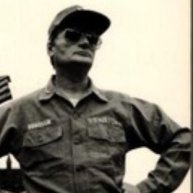
News Graveyards: How Dangers to War Reporters Endanger the World Journalist Nick Turse (Fellow, Type Media Center) examines how, since the 2000s, national governments and terrorist groups – from Israel, Syria’s Assad regime and the United States to the Islamic State – have found ways to curtail conflict coverage through myriad means, from repressive policies to armed attack. All have killed journalists and helped to foster a culture of impunity, turning conflict zones like Syria and Gaza into “news graveyards.” War Reporters Killed https://politicsthisweek.gn.apc.org/2026/02/the-bristol-politics-show-presented-by-tony-gosling-11/ The war in Gaza has, since October 7, 2023, killed more journalists than the U.S. Civil War, World Wars I and II, the Korean War, the Vietnam War (including the conflicts in Cambodia and Laos), the wars in Yugoslavia in the 1990s and 2000s, and the post-9/11 war in Afghanistan, combined. Worldwide, threats to journalists in conflict zones are increasing. In 2023, a journalist or media worker was, on average, killed or murdered every four days. In 2024, it was once every three days. Most reporters harmed or killed, as is the case in Gaza, are local journalists. Not only do local reporters face great risk, standing alone in the face of extraordinary violence; this also impairs news coverage and, as a result, the worldwide information ecosystem. The decreasing number of experienced foreign correspondents in conflict zones, due to long term shifts in the global news industry that have led to the de-prioritization of international news coverage and the closure of foreign news bureaus, has likewise crippled critical knowledge and helped facilitate the creation of news graveyards. Reliable information about wars and conflicts is essential for the wellbeing of local populations and is necessary to enlighten the world on the forces behind wars and the toll on civilians. https://costsofwar.watson.brown.edu/paper/news-graveyards-how-dangers-war-reporters-endanger-world Nick Turse is a fellow of the Type Media Center and was previously an Ochberg Fellow at the Dart Center for Journalism and Trauma at the Columbia University Graduate School of Journalism. He has reported on civilian harm in the Middle East, South Asia, and Southeast Asia and from conflict zones across Africa, including the Democratic Republic of Congo, Libya, Somalia, and South Sudan. He has received a Ridenhour Prize for investigative reporting, a Military Reporters & Editors Association Award for Best Overseas Coverage, and a Deadline Club Award for Reporting by Independent Digital Media.